
Find It. Stop It.
Roof Leak Repair in Pensacola
Water is getting in and you need it stopped — we trace the leak to where it actually starts and fix that, not the stain it left behind.
Why the Stain Is Rarely Under the Hole
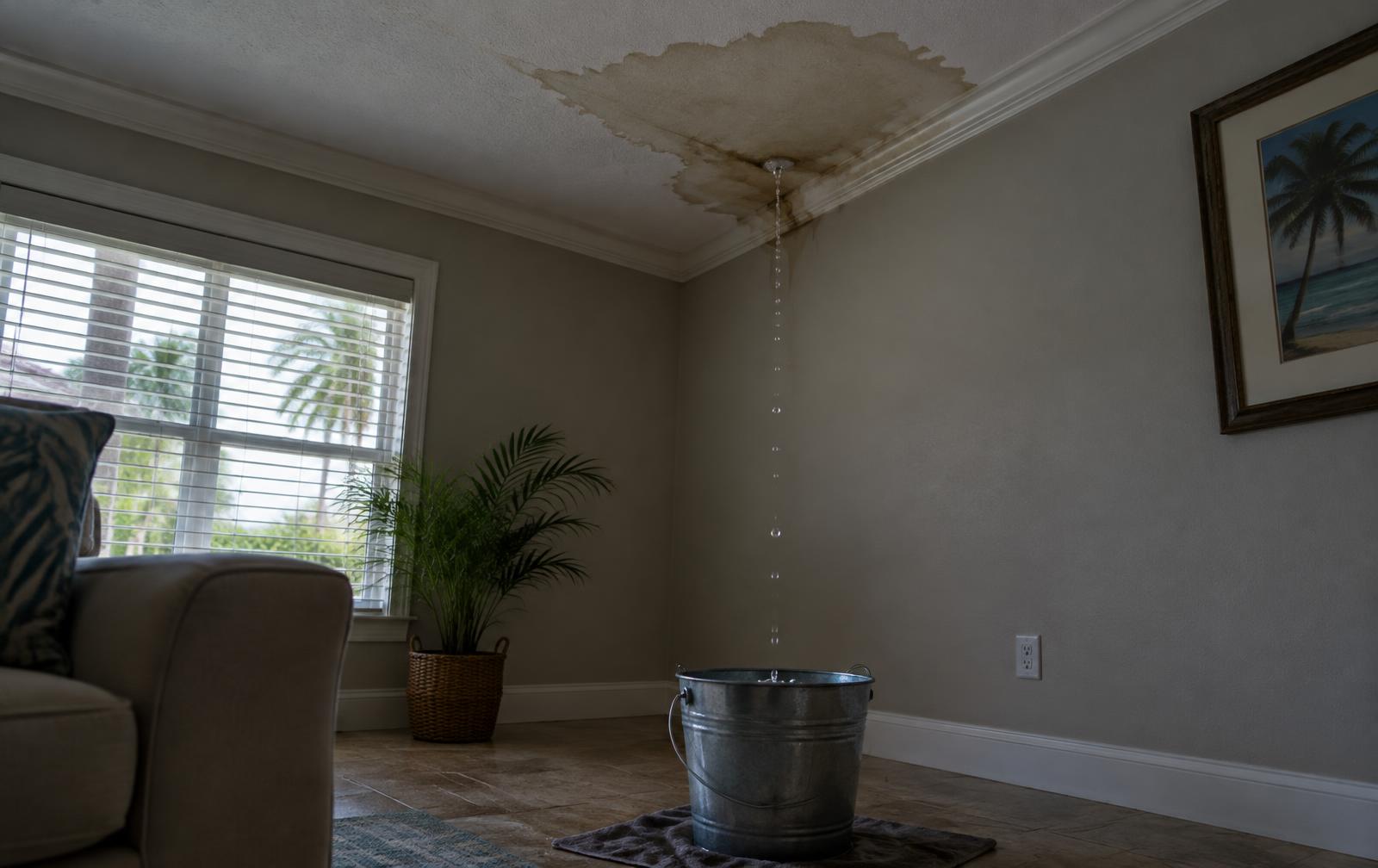
The most frustrating thing about a roof leak is that it lies to you. The brown ring on the ceiling is where water gave up and dripped — not where it came in. Water entering at a failed pipe boot can run ten feet down a rafter before it shows itself. Wind-driven rain can sneak under a shingle on the west slope and announce itself over the kitchen. Chasing the stain instead of the source is how homeowners end up patching the same ceiling three times. We start where the water starts.
Where Panhandle Roofs Usually Let Water In
After enough leak calls across Escambia, Santa Rosa, and Okaloosa counties, patterns emerge. The usual suspects:
- Wind-driven rain forced under shingles during tropical weather
- Pipe boots baked brittle and split by years of sun
- Flashing gaps at chimneys, walls, and skylight curbs
- Valleys where pine straw and debris hold water against the shingles
- Skylight seals that have shrunk and cracked with age
- Flat-roof seams that have opened up, especially where water ponds after rain
What to Do in the First Hour
- Move what matters. Get furniture, electronics, and rugs out from under the drip.
- Contain the water. Buckets and towels under every drip point. If the ceiling bulges, drain it in a controlled way into a container.
- Photograph everything. The stain, the drips, the damaged belongings — your insurer will want this record, and it's much harder to recreate later.
- Stay off the roof. A wet roof is dangerous, and walking it can turn a small repair into a bigger one. Leave the climbing to us.
How We Trace a Leak
Leak tracing is detective work. We start in the attic when there is one, following water trails, darkened wood, and rusted nail tips uphill to the entry point. On the roof, we inspect the suspect components above that area — boots, flashing, valleys, seams — and look for the failure that matches the evidence inside. On flat commercial roofs, we walk seams and penetrations methodically, paying special attention to ponding zones. When the source is confirmed, you get photos of exactly what failed and a written scope for the fix.
Temporary Stop vs. Permanent Fix
Sometimes the right first move is stopping the water today and scheduling the permanent repair for dry weather — especially after a storm, when a properly secured tarp protects the opening while materials and scheduling come together. What we won't do is pass off a smear of caulk as a repair. A permanent fix means repairing or replacing the component that failed so the next tropical downpour is a non-event.
The Humidity Problem Nobody Sees
In Pensacola's climate, the drip you see is only part of the story. Insulation that got wet stays damp, drywall wicks moisture sideways, and mold can establish itself in a closed cavity within days. If your leak ran for any length of time, ask us about the condition of the decking and insulation around it — drying and, where needed, replacing that material is part of doing the job right. And if the leak turns out to be one symptom of a roof with wider damage, our roof repair page explains how we handle the components themselves — leak repair is about finding and stopping the water; general repair is about everything else that wears out.
Roof Leak FAQ
Areas We Serve
Based in Pensacola, working across Escambia, Santa Rosa, and Okaloosa counties.
Related Services
Roof Repair
Shingles, flashing, pipe boots, vents, and roof-edge damage fixed without a full re-roof.
Learn moreEmergency Roof Tarping
Secure temporary protection after hurricane, tree, or wind damage while repairs are planned.
Learn moreRoof Inspections
A no-cost look at your roof's condition with photos and a straight answer.
Learn more