
Storm Damage Response
Emergency Roof Tarping in Pensacola
When a hurricane, fallen tree, or torn-off shingles leave your roof open to the sky, a properly secured tarp keeps the damage from multiplying.
When a Roof Needs a Tarp
Some storm damage can wait for a scheduled repair. Some cannot. If wind has stripped a section of shingles down to the deck, a limb has punched through, or flashing has been torn away and rain is in the forecast, every hour the roof stays open adds water to your insulation, drywall, and framing. Tarping is the bridge between the storm and the permanent fix — it stops the bleeding so the real work can be planned properly instead of in a panic. Our current response availability: [EMERGENCY HOURS].
A Tarp That Survives the Next Storm
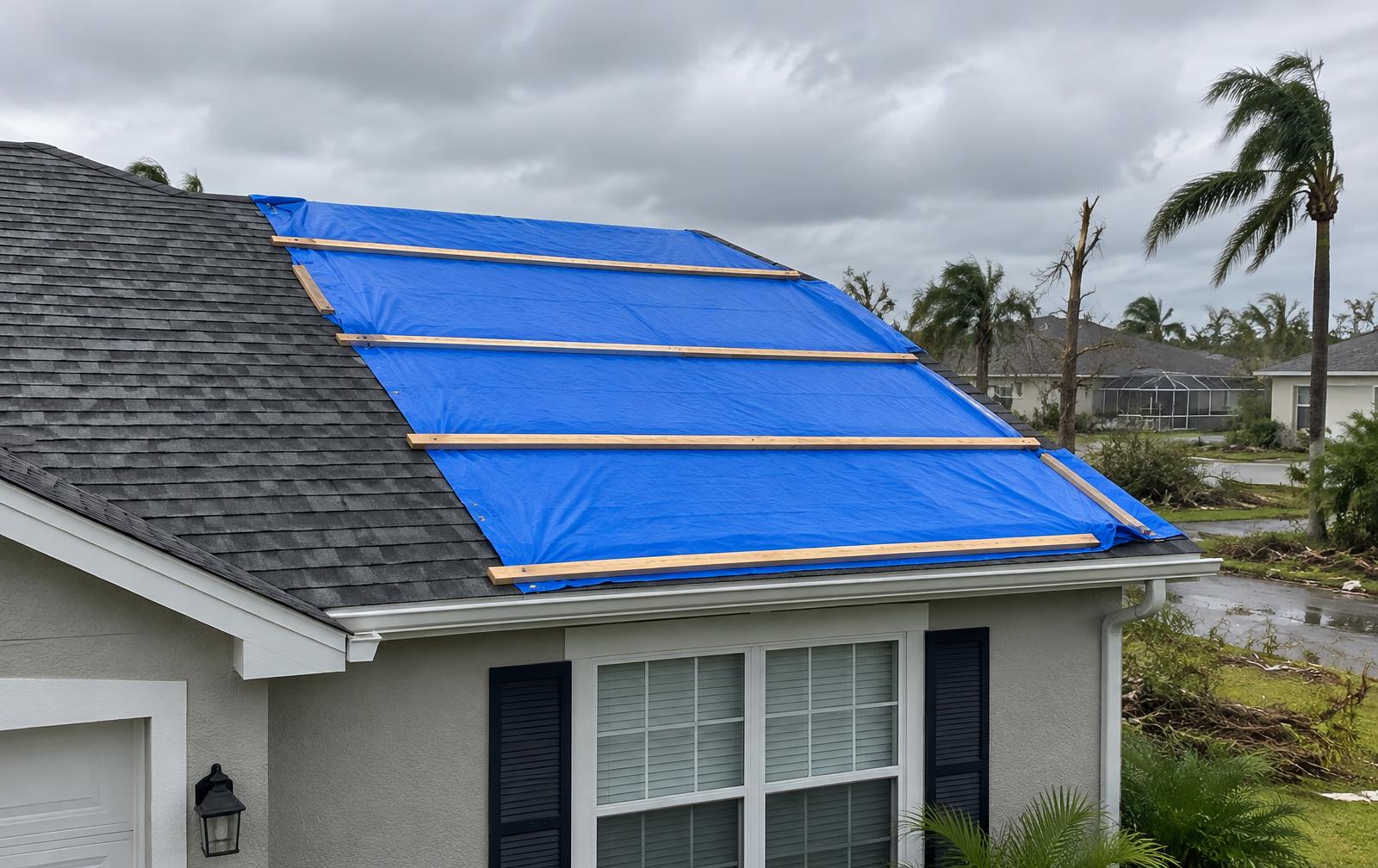
After every hurricane, Panhandle neighborhoods fill with blue tarps — and after the next band of squalls, half of them are flapping in someone's yard. A tarp only protects your home if it stays on, and Gulf winds are unforgiving to shortcuts. Here's what a professional installation looks like:
- The tarp extends past the ridge, so water sheds over the peak instead of running underneath
- Edges are wrapped around wooden battens and anchored into sound decking — not weighted with bricks or tied to gutters
- Overlaps run downhill like shingles, so water never meets a seam head-on
- The damaged area is cleared of loose debris first, so the tarp lies flat and doesn't chafe through
The difference matters most at 2 a.m. when the outer bands of the next system roll through. A secured tarp is boring — and boring is exactly what you want.
Tarping and Your Insurance Claim
Here's something many homeowners don't learn until the claim: your policy almost certainly requires you to take reasonable steps to prevent further damage after a covered loss. Tarping is the textbook example. An open roof that keeps taking rain for weeks can give an insurer grounds to push back on the interior damage portion of a claim. A documented, professionally installed tarp shows you did your part — and the cost is commonly reimbursable as part of the claim. Keep every photo and the invoice.
Document First, Cover Second
Before the tarp goes on, the damage needs to be recorded. We photograph the affected slopes, the exposed decking, and any interior water intrusion before anything is covered up, because once the tarp is on, that evidence is hidden. Those photos go to you in an organized set you can hand straight to your adjuster. If you can safely take your own photos from the ground before we arrive, even better — more documentation never hurt a claim.
How Long Can a Tarp Stay Up?
A well-installed tarp holds for weeks to a few months — long enough to get through the claim process and onto the schedule for permanent work. It is not a roof, and it shouldn't become one. Florida sun degrades the material, wind works at the edges, and a tarp left too long fails at the worst possible time. If your permanent repair is delayed, ask us to re-check the tarp's condition rather than assuming it's still doing its job.
From Tarp to Permanent Fix
Tarping is the first chapter, not the story. Once your roof is secure and dry, we put together the written scope for what comes next — whether that's a targeted repair of the damaged section or, when the storm took enough of the roof with it, a full replacement. If water already found its way inside, our leak repair page covers how we trace and stop it. Either way, you'll have the photos, the paperwork, and a plan.
Emergency Tarping FAQ
Areas We Serve
Based in Pensacola, working across Escambia, Santa Rosa, and Okaloosa counties.
Related Services
Roof Leak Repair
Active leaks traced to their source and stopped — before hidden moisture spreads.
Learn moreRoof Repair
Shingles, flashing, pipe boots, vents, and roof-edge damage fixed without a full re-roof.
Learn moreRoof Replacement
Full tear-off and re-roof for homes and commercial buildings, built to Florida wind code.
Learn more